The theology of The Church of Jesus Christ of Latter-day Saints is grounded in the doctrines of the covenant relationship between God and His children. God’s relationship with mankind has always been defined by covenants. Beginning with the first covenant made with Adam and Eve, God has consistently entered into sacred, binding relationships with His children through covenants. These covenants continued with Noah, Abraham, Moses, and the house of Israel, and they all pointed forward to their fulfillment in the new covenant through Jesus Christ.
We are blessed to live in a time when the fulness of the gospel of Jesus Christ is upon the earth and to participate in its ongoing Restoration. There is no greater blessing than being invited into a personal and sacred covenant relationship with God. Under President Russell M. Nelson’s leadership, the Church’s emphasis on our covenant relationship with God has deepened significantly. As a result, the phrase “covenant path” has become central in modern Church discourse. For example, in 2018 alone, it was used 36 times in General Conference. Since then, it has appeared in 35% of all General Conference addresses.
But what exactly does this phrase mean? What is our “covenant path”? Although its frequent use by Church leaders highlights its importance, this very repetition can sometimes make the phrase feel vague or routine.
Even more importantly, covenants themselves are often misunderstood. Many people think of covenants as commandments. They view our covenants with God as the rules we must follow to earn God’s blessings. This view distorts the true beauty of covenant theology. It substitutes the freedom found in living with and through Christ for the heavy yoke of legalism and performance-based religion. Rather than deepening our relationship with the Savior, this reductionist view of our covenants fosters a form of discipleship rooted in appearance, obligation, and self-reliance.
Covenant theology is not about rules. It’s about relationship. That is what our covenant path really is: our personal walk with Christ. Covenants are God’s chosen way of drawing us closer to Him. They are invitations to participate in His divine nature, to receive His power, and to walk with Him daily. Our covenant path isn’t a set of rules. It’s a sacred journey with the Lord, designed to shape our lives, liberate us from the troubles of this world, and transform our very nature as we walk with Him. In the final hours of His mortal ministry, the Savior reassured all of His disciples: “These things I have spoken unto you, that in me ye might have peace. In the world ye shall have tribulation: but be of good cheer; I have overcome the world” (John 16:33). As we stay bound to Christ through covenant faithfulness, our covenant path gives us His strength, and enables us to overcome the world, just as He did.
In discourse and teachings among church members, covenants are often described as two-way promises. God promises that if we do A, He will bless us with B. This description is not inaccurate, however it is far too shallow to capture the richness of the relationship which Christ is inviting us into. A two-way promise is akin to a contract. A contractual relationship is impersonal and self-interested. Each party gives only to get.
The Lord does not desire a transactional relationship. Jesus knows and loves each of us perfectly, and He invites us into a sacred and binding relationship rooted in covenant faithfulness, not mere rule-keeping. Walking our covenant path is about loyal devotion to Christ, based on the love which we have in our hearts for Him. Our covenant path is a divine gift from God. It is a structured, step-by-step journey with Christ. Through this sacred relationship, we are guided toward exaltation—where we may become like God and receive all that He has, including eternal family relationships.
President Russell M. Nelson beautifully described the sacred nature of our covenant relationship with Christ when he said: “Once you and I have made a covenant with God, our relationship with Him becomes much closer than before our covenant. Now we are bound together. Because of our covenant with God, He will never tire in His efforts to help us, and we will never exhaust His merciful patience with us. Each of us has a special place in God’s heart” (“The Everlasting Covenant,” Liahona, Oct. 2022).
Covenants formalize our commitment to God. More than that, they structure and deepen our relationship with Him. They bind us to Christ in a way that gives us access to His sustaining, healing, and sanctifying power. As the Apostle Paul taught, this union with Christ is real. It is not symbolic; it is transformative:
“I am crucified with Christ: nevertheless I live; yet not I, but Christ liveth in me…” (Galatians 2:20)
“Therefore if any man be in Christ, he is a new creature: old things are passed away; behold, all things are become new” (2 Corinthians 5:17)
When we enter into a sacred covenant relationship with Christ, we bind ourselves to Him. This covenant bond with the Lord becomes our source of spiritual strength and renewal. As we remain faithful to Him by keeping our covenants, we draw strength from Him. We are never alone on our covenant path; we walk it with the Lord.
Through the Holy Ghost, Christ gives us strength we didn’t have, clarity we couldn’t find, and peace that doesn’t make sense. Most importantly, the Spirit facilitates within us a transformation we could never produce on our own. The very purpose of our mortal journey is to be changed, sanctified, and born again through Jesus Christ. That sacred process begins now, continues into eternity, and is facilitated by our covenant relationship with the Lord.
As the Lord declared through Ezekiel, “A new heart also will I give you, and a new spirit will I put within you: and I will take away the stony heart out of your flesh, and I will give you an heart of flesh. And I will put my spirit within you, and cause you to walk in my statutes…” (Ezekiel 36:26–27).
This, then, is our covenant path. It is Christ’s personal invitation to journey with Him, to be changed by Him, and ultimately to become like Him. When we remain faithful to Christ through our covenants, we are spiritually bound to the One who has descended below all things, and overcome all things. (Doctrine and Covenants 88:6) Christ’s victory becomes our victory. His power becomes our strength. Through this covenant bond, we are sanctified and transformed. This is the divine process by which we become new creatures in Him and progress eternally toward the gift of eternal life and everlasting family relationships.
As we press forward on our covenant path, with steadfastness in Christ, being blessed by the Spirit with His perfect brightness of hope, (2 Nephi 31:20) We must always remember that our covenant faithfulness is not measured by exact obedience or our outward appearance. Our faithfulness is demonstrated by our love, faith, and complete trust in Him. The Lord does not demand perfection. He knows us perfectly and exactly what we are capable of. He asks only for our hearts. He asks that we keep choosing Him, that we believe in Him, trust Him, and strive to align our thoughts, desires, and actions with His will. Above all, He asks that we never give up.
Conclusion
No matter how far you’ve wandered or how often you’ve fallen, Christ’s invitation remains the same: Come unto Me. Every time you turn to Him, He will be there. He will lovingly receive you with mercy, grace, and joy. As Elder Dieter F. Uchtdorf beautifully taught, “Our Savior, the Good Shepherd, knows and loves us. He knows and loves you. He knows when you are lost, and He knows where you are. He knows your grief. Your silent pleadings. Your fears. Your tears. It matters not how you became lost—whether because of your own poor choices or because of circumstances beyond your control. What matters is that you are His child. And He loves you. He loves His children.” (“He Will Place You on His Shoulders and Carry You Home” – April 2016 General Conference)
Wherever you are on your covenant path, Christ walks beside you. If you have not yet begun that journey, His arms are open to receive you. You are already loved. You are already wanted. The covenant path is not reserved for the perfect; it is offered to the humble, the weary, and the willing. Come walk with Christ. Let Him change your heart. Let Him carry your burdens. And let Him make you new.
The teachings of Christ in the Sermon on the Mount are central to the faith of all His disciples. More than that, they embody the very ideals that those who love Him strive to live by in mortality. As President Howard W. Hunter declared in October 1994, “The teachings of the Master in the Sermon on the Mount are not outdated. They are the essence of the gospel of Jesus Christ and should be the very center of our lives.”
These sacred teachings can be found in Luke chapter 6 (often called the Sermon on the Plain), and in 3 Nephi chapters 12 through 14 in the Book of Mormon. However, they are most commonly examined in Saint Matthew’s gospel, chapters 5 through 7.
At the very heart of that sermon is Matthew chapter 6. This chapter of scripture not only captures the central message of the Sermon on the Mount, but reveals the very character, priorities, and divine nature of Christ Himself. In Chapter 5, Jesus has described the character of His true followers. Now in Chapter 6, the Savior shifts and teaches us how to strive to live the practices of true discipleship. This chapter focuses on the inner life of a disciple, and here the Lord shows us His true and eternal perspective. In doing so, He teaches us what every follower of Christ should truly be striving to accomplish in life: to live fully for God, and not for the world.
Verses 1–6 teach us to guard against pride in seeking the praise and admiration of others. This is a common trap. As human beings, we naturally long for affirmation, and in the context of community worship, it’s normal to hope that our efforts are seen and appreciated. In fact, it is a blessing when the Lord allows us to witness how our service has impacted others. So, what is the difference? How do we rightly receive appreciation without falling into the desire to “be seen of men”?
This question becomes even more important when we recall that earlier in the same sermon, Christ commanded us to “let our light so shine before men” (Matthew 5:16). How can we strive to be a light and an example to others, while still avoiding the danger of performing righteousness for the sake of visibility? How do we live in such a way that brings glory to God—not to ourselves?
The answer lies in our heart: our true desire. If no one ever acknowledged your efforts, yet you felt prompted by the Spirit to speak, teach, or serve, would you still do it? Why are you doing it in the first place? If your motivation is a sincere desire to obey the Lord and follow His promptings, then your heart is in the right place. In that case, you are living the balance Christ teaches: letting your light shine without seeking to be “seen of men.”
Ask yourself: if no one liked what you said, would you still share it? If some even opposed it, would you remain faithful to what you felt called to do? If the answer is yes, then take comfort. You are walking with integrity before God, and He who “seeth in secret shall reward thee openly.”
Verses 5 and 6 naturally lead into one of the most profound teachings the Lord ever gave on the subject of prayer. In verses 5 through 13, we are blessed with some of the most vital and powerful instruction in all of scripture regarding how, and why, we pray.
Verse 5 begins by calling us to examine the motives of our hearts. Then, in verse 6, Christ shows us a deeper understanding of prayer’s true purpose: the nature of prayer is to nurture a personal and private relationship with God.
True disciples of Christ seek a real, vital, and private relationship with Him. And, like any important relationship, communication is essential. Frequency, honesty, vulnerability; these are the hal;lmarks of every powerful bond we have with those whom we are closest, and they are equally vital in our relationship with Christ. This is the heart of prayer. It is not a ritual to check off on a spiritual to-do list, nor a formula to automate and release God’s blessings. To treat prayer that way diminishes both its power and the relationship it is meant to deepen.
One of the most beautiful and powerful teachings of Christ (and a personal favorite of mine) is found in verse 8, “your Father knoweth what things ye have need of, before ye ask him.” God already knows us. He already loves us. Prayer is not to inform Him of our needs, but to draw us closer to Him because of His perfect love.
With that in mind, verses 9 through 13 present a divine outline for addressing God. This is not a model merely to recite. It is a blueprint for heartfelt, reverent, and spiritually grounded communication with our Heavenly Father.
One more detail in verse 6 is worth emphasizing. When the Lord instructs us to enter our closet, He is teaching us the importance of having a personal, sacred space where we can commune with Him. President Russell M. Nelson has taught about the need to make our homes “sanctuaries of faith.” Do you have such a place? A private and consistent space where you can meet with God regularly? Creating that kind of sanctuary (no matter how simple) invites divine peace into your home and your heart. And I testify that those efforts will be rewarded by a God who sees in secret.
As the Lord concludes His teaching on prayer, He does so by intentionally emphasizing one of the most repeated and vital principles in all of His teachings: the necessity of forgiveness. Few spiritual truths are taught by our Lord more frequently, more directly, and more powerfully than this. And here, Christ places it at the heart of prayer itself.
By inserting the command to forgive others into the structure of the Lord’s Prayer, Jesus reveals just how central forgiveness is to the life of a true disciple. It’s not an optional virtue or a spiritual finishing touch. It is a core condition of the heart that shapes our relationship with God. In fact, Christ’s placement of this teaching here may highlight more than any other passage just how essential forgiveness is in the mind, heart, and walk of every follower of Christ. Disciples of Christ must truly strive to forgive others in all aspects and contexts in order to truly be endowed with the power to be transformed into the people which the Lord desires that we become, to live in Him, and to find peace in this life and eternity. As President Russell M. Nelson has taught, “When we choose to forgive others, we allow the Lord to remove the poison from our souls. We permit Him to soothe and soften our hearts so we can find peace. The Savior’s Atonement makes that possible. And it is by forgiving others that we can fully access His forgiveness for us.” (“The Healing Power of Forgiveness,” General Conference, April 2021)
The principle of fasting, and it’s being closely tied to prayer, is emphasized by its placement immediately following the Lord’s instruction on prayer in verses 16 to 18. Once again, Christ warns us against pride and the temptation to seek the approval of others. However, I believe that the most powerful message in this passage is the connection itself of prayer and fasting. By placing His teachings on fasting directly after prayer, the Savior teaches us about the spiritual link between the two.
Fasting and prayer are not isolated practices. In fact, they are deeply interwoven. Together, they form a vital aspect of discipleship. They strengthen, and amplify the other. Their pairing in this passage illustrates not only their individual importance, but their combined power in drawing us closer to God.
As beautiful and profound as all the preceding teachings in this chapter are, they ultimately build to the teachings found in verses 19–34. In Matthew Chapter 6, verses 19-34, everything converges. Not just the message of Matthew 6, or even the Sermon on the Mount as a whole, but the whole of the Gospel of Christ, and even the very purpose of our mortal journey.
Inverses 19–21, Jesus admonishes us to examine our hearts by asking, in effect, “What do you truly treasure?” Christ is not teaching us here only about money. This teaching is about desires, leading to our identity, and leading ultimately to our eternal destiny. While the Lord uses the term ‘riches,’ His teaching is far beyond a rebuke of greed or materialism. Jesus is not merely saying, ‘You can’t take it with you.’ He’s teaching us that we are all shaped by what we love most.
Our desires direct our attention, shape our actions, and ultimately form our identity. We all act in accordance with our own self-image. Eventually, we become what we treasure. That process begins not with behavior, but with what we treasure and desire in our hearts. If our desires are centered on earthly things, our life will follow an earthly trajectory. We may obtain those things which can produce pleasure and temporary satisfaction. But we will not obtain true joy which lasts in both this life and eternally. However, if our treasure is in heaven, and if our heart and focus is truly fixed on Christ, only then can God prevail in our lives, bring us peace, joy and fulfillment in all circumstances of life, and transform us into something eternal.
Look closely at verses 22–23. When Jesus speaks of the “eye,” He is referring to our focus. What do we fix our hearts and minds upon? This includes our desires, but even more importantly, our perspective. When our eye is single to God, only when we are blessed with the ability to see through an eternal lens, can our whole being be filled with light. Only then can we see life as it truly is. Priorities shift. Desires are changed. Everything finds its proper context.
On the other hand, when our perspective is clouded by a limited, mortal view, we stumble right from the outset. Our life is unavoidably misaligned. Decisions lose their clarity. Fear and uncertainty are the inevitable result. Not the peace and trust which can only come when we have a true perspective and an “eye single to the glory of God”.
Perspective is everything! There can be no greater blessing in this life than the gift of a true, eternal perspective. The ability to see ourselves and our lives as God sees them. As King Benjamin taught, “the natural man is an enemy to God” (Mosiah 3:19), and part of that condition is seeing ourselves only as physical beings, driven by earthly needs and desires. Only through the influence of the Holy Ghost, we are able to see the truth: we are spiritual beings, temporarily living in mortality as part of a divine pilgrimage of discipleship.
Only with this God-given perspective can our priorities be rightly ordered. Only with this eternal view (a blessing given to us by God through the Holy Spirit) can we experience the peace and joy that comes from the freedom of living in Christ as we fully trust, and rely upon God.
Verse 24 of Matthew 6 contains one of the most important and powerful statements ever made by the Lord: “Ye cannot serve God and mammon.” The word serve is instructive. Jesus doesn’t say, “You shouldn’t,” but “you cannot.” This isn’t a warning against greed, it’s a propositional statement about divided allegiance. We may like to imagine that we have control over our desires. We may think that we love Jesus and His gospel, but we also love our career, home, cars, our position in life as well. Christ is important, but only one of many things in our live which are important. So we think. But the truth is, whatever we nurture in our hearts will eventually shape our identity and claim our loyalty. Desire becomes devotion, and devotion becomes mastery.
Jesus makes it clear: we cannot live for two masters. One will displace the other. Christ and the world both will both demand complete allegiance. The pursuit of wealth, power, prestige, influence, or admiration is a rival lord. And Christ will not share the throne of our hearts. He demands, and certainly deserves, our whole selves: “Thou shalt love the Lord thy God with all thy heart, and with all thy soul, and with all thy mind, and with all thy strength.” This is a call of total surrender. In one form or another, Jesus says to each one of us, “Go, sell all that thou hast, and come, follow me.”
Make no mistake: this is a totalitarian demand given us by Christ. But it is a loving one. As Jesus says, “Either he will hate the one and love the other; or else he will hold to the one and despise the other.” There is no room for compromise. To give our hearts to the things of this world, whether it be money, status, physical possessions, or the praise of men, is to forfeit the eternal perspective which alone can give meaning, peace, and fulfillment in this life and in the life to come.
This eternal perspective is what empowers us to live the teachings that follow in verses 25–34. With our hearts centered on God and our eyes fixed on eternal things, we can then let go of one of mortality’s heaviest burdens: anxiety.
These verses contain some of the most beautiful and powerful teachings of our Lord. On many occasions He has used them to bring peace to my soul and fill my heart with encouragement and hope. Of all the Savior’s teachings, these are among my personal favorites. They encompass the deepest parts of my faith and my love for the Lord, and have sustained me in times of need.
Here, Jesus addresses the everyday concerns that weigh on all of us in mortality: What shall we eat? What shall we drink? What shall we wear? He is speaking not only of food, water, and clothing, but of all the practical necessities of life. Money, bills, stability, provision. These verses speak directly to the common anxieties of daily living, the very things that occupy so much of our time, energy, and worry.
Christ invites us to see these concerns from His true and eternal perspective: “Is not the life more than meat, and the body than raiment?” (v. 25). In essence, the Savior is saying, If you truly understand who you are, and who God is, then you can trust that your Father knows your needs and will care for you.
The lilies of the field and the birds of the air are not anxious, and yet they are sustained by God’s hand. How much more, then, will He care for those made in His image, and who are striving to walk the path of discipleship?
As the great Reformer and theologian John Calvin once observed, “There is no more fatal plague for all godly living than to be absorbed with earthly cares… We are to strive to be citizens of heaven while we are pilgrims on earth.”
Verse 27 of this chapter is one which is personally very meaningful for me. Recently, Christ has taught me profoundly through this verse. It holds powerful meaning for those struggling with anxiety and fear: “Which of you by taking thought can add one cubit unto his stature?” This simple but powerful question teaches us that worrying about the future does not add anything to our lives; it does not change the outcomes or lengthen our days. It cannot help us. It can only hurt. Indeed, anxiety can rob us of peace and distract us from trusting in God’s timing and providence. As Elder Dieter F. Uchtdorf taught, “Anxiety and worry can consume us if we let them, but faith in God and His love is our antidote.” Matthew 6:27 invites us to lay down the heavy burden of worry and to place our trust fully in our Heavenly Father, who cares deeply for us and knows exactly what we need, when we need it.
Of course this is not an invitation to idleness. It is a teaching to trust. In fact it is an invitation to strive for a radical, and childlike trust in the goodness and providence of our Heavenly Father, and to find the peace that only it can provide.
The antidote to anxiety is mortality is not control, but confidence in God. And so, the Savior offers this transformative command:
“Seek ye first the kingdom of God, and his righteousness; and all these things shall be added unto you” (v. 33).
When we see ourselves and our lives, with true and eternal perspective, we begin to understand: we were never meant to carry the weight of the world. We were meant to carry only faith, and to let God carry us.
Matthew 6:34 is my favorite scripture: “Take therefore no thought for the morrow: for the morrow shall take thought for the things of itself. Sufficient unto the day is the evil thereof.” In this verse, the Savior offers a loving and powerful invitation: stop carrying tomorrow’s burdens today. Christ knows how hard it is. He knows us perfectly. He knows how easily our minds look ahead, thinking about the “what-ifs”, and worst-case scenarios.. But He teaches and invites us to live in the present moment, where His grace is sufficient and His peace is available. Each day brings its own challenges, and also its own blessings. This final verse is truly the soul of Matthew Chapter 6. It is a call to release our fear, to resist the praise of the world, to allow God to prevail in our lives with the Holy Spirit focusing our hearts toward heaven, and to trust fully in God who sees, knows, and always provides.
In this chapter, Christ offers not just commandments, but a vision and invitation for a higher and holier way of life. A life where the heart is turned fully to the Father, and the soul finds rest in Him.
Any person who will read Matthew Chapter 6 with an open heart, and a true desire to learn from the Lord will be taught by Him. The Savior’s words will speak peace to their soul and clarity to their mind. Ask yourself what you are striving for, what you are fearing, and where your treasure truly lies. Christ’s words in this chapter are an invitation to trust Him. To live more simply, and to walk through life with Him. When we seek Him first, everything else will fall into its proper place.
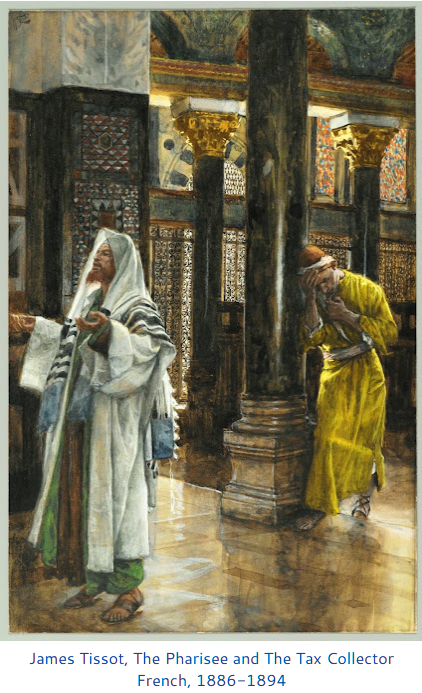
Luke 18:9–14 (KJV): “And He spake this parable unto certain which trusted in themselves that they were righteous, and despised others: Two men went up into the temple to pray; the one a Pharisee, and the other a publican. The Pharisee stood and prayed thus with himself, God, I thank thee, that I am not as other men are, extortioners, unjust, adulterers, or even as this publican. I fast twice in the week, I give tithes of all that I possess. And the publican, standing afar off, would not lift up so much as his eyes unto heaven, but smote upon his breast, saying, God be merciful to me a sinner. I tell you, this man went down to his house justified rather than the other: for every one that exalteth himself shall be abased; and he that humbleth himself shall be exalted.”
One of the great challenges for disciples of Christ is maintaining a truthful perspective regarding our complete dependence upon Him for our standing before God. Our standing before God is not earned by our own righteousness, but is secured by the righteousness of Christ. As the Apostle Paul declared, “All have sinned, and come short of the glory of God” (Romans 3:23). The reason for our falling short doesn’t change the reality: none but the Savior will ever be perfect in mortality, and each of us must rely upon His grace to obtain salvation.
Obedience to the commandments of God brings both safety and peace, and covenant faithfulness to God invites God’s power into our lives. Additionally, Christ Himself declared that all who truly love Him will demonstrate that love by striving to keep His commandments. (John 14:15)
Yet even as we strive to keep God’s commandments, Christians must remain sensitive to the Holy Spirit and vigilant against the trap of legalism.
Legalism (also known as performance-based righteousness) is the belief that salvation or standing before God must be earned through personal achievement or religious effort. It diminishes the role of Christ and exalts the role of self. Rather than following the prophet Nephi’s counsel to “rely wholly upon the merits of him who is mighty to save” (2 Nephi 31:19), the legalistic believer focuses and relies upon personal achievement. Grace is not viewed a gift to receive but a conditional reward which must be earned, and only becomes applicable after a person reaches a certain threshold of righteousness.
Characteristics of those with a legalistic view of the Gospel of Christ include:
They measure a person’s spirituality (and often that of others) by outward appearance and actions rather than by inward devotion to Christ and personal transformation through the Holy Ghost.
They focus on performing perfectly rather than on trusting Jesus fully.
They treat the commandments of God as a checklist to prove one’s worth instead of seeing them as expressions of our covenant love for Christ.
The parable of the Pharisee and the tax-collector dismantles the belief that we earn favor with God by outward obedience alone. In this parable, Christ teaches that focusing on rule-following as the primary measure of righteousness is not only misled, but blinds us to the heart of His gospel. Christ wants our love and our loyalty, not our hollow compliance.
God’s commandments, and the moral principles by which Christians strive to live, are vital protections against the temptations of the world and the assaults of the adversary. They guide us toward holiness and help shape our lives in harmony with both eternal truth, and the will of our Father in Heaven. However, when rule-keeping becomes the central focus of our faith, it can become spiritually counterproductive. Instead of seeking daily direction from the Holy Spirit, a legalistic believer can begin to measure their standing before God based solely on external behavior. This mindset reduces discipleship to performance and can rob believers of the freedom, joy, and transformation offered through a living relationship with Christ. Furthermore, it hinders the process of sanctification by minimizing our dependence on the Spirit, whose role is to sanctify, guide, and change us from within.
Our eternal salvation is not something which we earn through our own efforts in mortality. Instead, it is the eternal progression of a transformation which is made possible by the infinite atoning sacrifice made for us by Christ, brought about by the Holy Ghost, and facilitated by our covenant faithfulness to God.
Christ desires that we be transformed, not conformed.
President Dallin H. Oaks addressed this principle in his October 2023 General Conference talk, “Kingdoms of Glory.” He taught:
“The Final Judgment is not just an evaluation of a sum total of good and evil acts—what we have done. It is based on the final effect of our acts and thoughts—what we have become. We qualify for eternal life through a process of conversion. As used here, this word of many meanings signifies a profound change of nature. It is not enough for anyone just to go through the motions. The commandments, ordinances, and covenants of the gospel are not a list of deposits required to be made in some heavenly account. The gospel of Jesus Christ is a plan that shows us how to become what our Heavenly Father desires us to become.”
President Oaks reminds us that God’s work and glory is not defined by His tracking our behavior and keeping score of our actions. His work is to transform our very nature. As Jesus said to Nicodemus, “Except a man be born again, he cannot see the kingdom of God” (John 3:3) The commandments and covenants of God are not ends in themselves, but the sacred means by which the Holy Spirit brings about that transformation.
True conversion and spiritual rebirth are the work of Christ and the ultimate goal of every disciple’s life. Conversion is not just about doing more; it’s about becoming more! More humble, more attuned to the Spirit, and ultimately more like our Lord Jesus Christ. When we truly understand this, we stop striving to prove our worth and we begin to “Let God prevail ” in our lives by surrendering to His power to change our hearts.
A legalistic approach to the gospel creates a number of problems, each of which stifle spiritual growth and diminish the joyful freedom we have when we live in constant fellowship with Christ.
These problems include:
Faith becomes burdensome: Focusing exclusively on exact obedience inevitably leads to the painful realization that we cannot do so with perfection. The legalistic believer measures their spirituality and worthiness by what they do, rather than by what Christ has already done for them. But, in one way or another, all will fall short. Subsequently, a legalistic approach to the gospel can result in a feeling of never being “good enough” or “doing enough.” When we focus on our failures and shortcomings, anxiety replaces peace, and the gospel of Christ becomes a burden rather than a source of joy and respite. This is not the way of Christ. He invites us to take His yoke upon us and to find rest in Him (Matthew 11:29). Legalism does the opposite. It turns church into a chore, and religion into a stressful and burdensome duty.
Feeling of inadequacy and shame: No one can perfectly observe all the rules all the time. It is true that the Lord can and does use “Godly sorrow” as a tool to drive us to repentance and to develop a sincere desire to live more completely and consistently in accordance with God’s will. However, shame is only a tool of the adversary. It is not a gospel principle nor consistent with the character of Christ. Shame causes us to doubt our salvation and to question the promises God gives to everyone who earnestly turns to Him in repentance and faith. Hope is at the very heart of the Gospel of Jesus Christ. Shame (which is often the fruit of legalism) produces the opposite, and causes us to feel inferior, unworthy, and hopeless.
Missing the Weightier Matters: Legalists place emphasis on what we must avoid, and focus on restrictions more than on the positive and transformative this which Jesus has commanded us to do. Legalists view obedience as only the avoidance of sin, and often neglect the higher call by Christ to actively do good. The principle of “exact obedience” is often understood as strict, mechanical rule-following. However, true “exact obedience” means striving to keep all of Christ’s commandments. Not only avoiding wrong, but also embracing the good thigs which our Lord has commanded us to do. Importantly, this includes placing proper weight on the things Jesus Himself emphasized: ministering to those in need, extending forgiveness, preaching the gospel, and cultivating faith in Him (see Matthew 23:23). The Gospel of Christ should be our source of inspiration, and joy. Legalism, however, can drain that joy, making it difficult for the gospel to remain a positive, and motivating force in our lives.
Judgmentalism: One of the most damaging effects of a legalistic approach to the gospel is the tendency to judge others harshly and self-righteously. Legalists often look down upon those who they feel don’t do what they think is right and proper. Emphasis is placed not only on obedience and compliance but also on outward appearance. Those who are deemed to be falling short are often looked down upon, and sometimes even shamed. This can directly hinder the Lord’s work by offending those with sincere hearts and a true desire to draw closer to Christ, and causing them to feel inadequate, unworthy, or unwelcome. This is in complete contrast to the character, teachings, and example set for us by Christ.
Denying the Power of Christ’s Atonement: As the prophet Jacob taught in 2 Nephi 9, the power of the atonement of Christ is infinite. Christ has perfectly fulfilled the law on our behalf. We do not honor Him by feeling that we have to fulfill it perfectly, too! While the importance of striving daily to live in accordance with God’s will through meek and humble obedience should never be minimized, neither should we feel that our salvation is in danger if we struggle at times to meet a certain standard of “worthiness.” Those who continually struggle with guilt regarding their spiritual worth should prayerfully strive to focus on what Christ has already done by His grace rather than on their own efforts.
Members of The Church of Jesus Christ of Latter-day Saints can be especially vulnerable to the trappings of legalism. In the early days of the Church, intense persecution fostered an insular community where cultural conformity became essential to group survival and unity. As a result, the Church developed a culture that places significant emphasis on outward appearance, conformity, and obedience—not only to God’s commandments but also to Church policies.
At the heart of Latter-day Saint doctrine is covenant loyalty. Covenantal theology is relational and centers on entering into and remaining faithful within a sacred partnership with God. However, it is often difficult for members of the Church to distinguish between covenant faithfulness and strict rule adherence. When gospel teaching overemphasizes specific commandments, the focus can shift from internal transformation to external compliance.
Compounding this challenge is the Church’s reliance on a lay clergy. Most local leaders receive little or no formal theological training, which can lead to gospel teachings which are well-meaning but are behavioral focused. Behavior is easier to teach and measure than grace, relationship, and spiritual renewal. As a result, gospel instruction often focuses on “what we must do” rather than “what Christ has done,” unintentionally fostering a performance-based approach to faith.
However, there are things that all followers of Christ can do to live in Him, continue walking in His freedom, and protect against the trappings of legalism:
Center Everything On Christ. The foundation of our testimony, the heart of our faith, and the focus of our every religious effort must be rooted in our personal relationship with Jesus Christ. Every aspect of our faith (including the truthfulness of the restored gospel) has been given to us by Him in order to help us find, strengthen, and deepen that relationship. Making time for the Lord each day through meaningful prayer helps us keep our focus on “What has Christ done for me?” and “How can I respond in gratitude and love?”, and protects us against the mindset of “Am I doing enough?” As we sincerely ask the Lord to help us “think celestial”, He will bless us with the ability to both see and feel the central role of Christ’s grace, not only in His doctrine, but in our daily life.
Teach, Preach, and Testify of Christ: As we teach the gospel in our homes and church callings, focusing on the central role of our covenant relationship with Christ, not a transactional religion, will help ourselves to develop and maintain that higher and holier perspective, and help others to be blessed likewise.
Allow others to see Christ in our weakness: We should never hesitate to speak openly about our weaknesses and the need which we have for the grace of Christ in our lives. Doing so sets a courageous and righteous example for others to follow. Our families and fellow Church members should see us pray for help, acknowledge when we fall short, and turn to Christ with hope. When we celebrate our progress and testify of the blessings and strength we receive from the Lord in our lives (even the smallest daily details) we help others recognize their need for the same grace from Christ in their lives. This honesty empowers others to see the Savior’s love and mercy working daily in their imperfections as well.
Speak the language of Grace: Using more relational and heartfelt language when we speak of faith; words like joy, love, belonging, and unity with Christ, helps us connect with the deeper purpose of the gospel. When our testimonies focus on who Christ is and what He has mercifully done for us and our families, rather than simply the rules we’ve kept and the blessings we’ve received, we begin to speak the true language of our merciful and loving Lord. This kind of testimony draws hearts to Christ.
Demonstrate our love for Christ through our obedience: We must always remember that our obedience must be a representation of the love we have for Christ in our hearts. Obedience should not be driven by fear of punishment or the belief that God will reject us or withhold His love and blessings because we are “unworthy.” A person motivated by fear will do only the minimum required to remove the perceived threat. But a person motivated by love will go to any length, even to their death, in loyalty and faithfulness. This is exactly the kind of devotion we are called to show toward Jesus. (Matthew 10:38–39 – Alma 24:19. This devotion to Christ is expressed through our daily actions in covenant faithfulness. When obedience is motivated by love, and rooted in our relationship with Christ, it becomes a joyful expression of devotion , not a fearful attempt to prove our worth.
Follow the Spirit, Not the Checklist: A daily focus on attuning our hearts to the Spirit (rather than simply completing a checklist of required actions) enables us to live in Christ, as He guides our thoughts, feelings, and choices. This is the essence of true freedom and covenant faithfulness. We should approach Come, Follow Me, our Church assignments, Sunday meetings, and personal worship not as boxes to check, but as sacred opportunities to connect with Christ and deepen our private relationship with Him. In doing so, we truly become Jesus’ students; learning, growing, and following Him out of love, not obligation.
Ask the Lord to make Church and Home holy: We should frequently and powerfully ask the Lord to help us make Church, and our home, places of joy, respite, and spiritual revival. Not places of pressure or duty.
The heart of the gospel of Jesus Christ is our covenant relationship with Him. Love is the source which compels true followers and students of Christ to strive daily for obedience.
Those who truly love the Lord, and strive to live in covenant relationship with Him, understand that our “freedom” in Christ does not give us the liberty to violate any of His commandments or to ignore any of His teachings. Christ expects His disciples to learn what He has revealed, strive daily to live according to His teachings, and fully trust that He will make up for all of our shortcomings.
The desires of our heart are of fundamental importance in the sight of God. (Doctrine and Covenants 137:9) We must never lose sight of the fact that all of the commandments of God are encompassed in that we love God with all our heart, and that we love our neighbors as ourselves (Matthew 22:37-40). No matter what we do, if our conduct does not truly reflect the love which we have in our heart for God and for others, God will not be pleased with us. We can keep every commandment and follow every church policy perfectly, yet if we are not motivated by love, it would be of of little worth in God’s sight. (Moroni 7:46)
In conclusion, I turn to the inspiring and hopfeful teachings of Elder Jeffrey R. Holland, delivered in his October 2017 General Conference message, “Be Ye Therefore Perfect—Eventually.”
“My brothers and sisters, except for Jesus, there have been no flawless performances on this earthly journey we are pursuing. So while in mortality, let’s strive for steady improvement without obsessing over what behavioral scientists call “toxic perfectionism.” We should avoid that latter excessive expectation of ourselves and of others and, I might add, of those who are called to serve in the Church—which for Latter-day Saints means everyone, for we are all called to serve somewhere…Brothers and sisters, every one of us aspires to a more Christlike life than we often succeed in living. If we admit that honestly and are trying to improve, we are not hypocrites; we are human. May we refuse to let our own mortal follies, and the inevitable shortcomings of even the best men and women around us, make us cynical about the truths of the gospel, the truthfulness of the Church, our hope for our future, or the possibility of godliness. If we persevere, then somewhere in eternity our refinement will be finished and complete—which is the New Testament meaning of perfection.
I testify of that grand destiny, made available to us by the Atonement of the Lord Jesus Christ, who Himself continued “from grace to grace” until in His immortality He received a perfect fulness of celestial glory. I testify that in this and every hour He is, with nail-scarred hands, extending to us that same grace, holding on to us and encouraging us, refusing to let us go until we are safely home in the embrace of Heavenly Parents. For such a perfect moment, I continue to strive, however clumsily. For such a perfect gift, I continue to give thanks, however inadequately. I do so in the very name of Perfection itself, of Him who has never been clumsy or inadequate but who loves all of us who are, even the Lord Jesus Christ, amen.”
For followers and students of Jesus Christ, nothing is more vital, essential, and precious than prayer. Our Lord Himself exemplified dedication, devotion, and reliance on prayer throughout His mortal ministry. Christ repeatedly taught the power and importance of prayer. Through direct instruction, His parables, and His own example, our Lord was, and still is today, very clear on the essential role which prayer must play in our relationship with our Heavenly Father.
Prayer, when rightly understood and integrated into the life of a Christian believer, serves primarily to draw us closer to our Heavenly Father and His Son, Jesus Christ. This intimate connection with God through Christ is the central purpose, and outcome of every action a Christian undertakes. As Christ declared in His great Intercessory Prayer, “And this is life eternal, that they might know thee the only true God, and Jesus Christ, whom thou hast sent” (John 17:3). Our relationship with Christ is not merely a byproduct of living His gospel; rather, it is the objective of every effort we make to follow Him. It is only through this personal, private, and intimate relationship with Christ that we experience the internal transformation which is the purpose of our lives.
President Ezra Taft Benson taught, “The Lord works from the inside out. … Christ can change human nature” (“Born of God,” October 1985 General Conference). The scriptures affirm that “the natural man is an enemy to God, and has been from the fall of Adam, and will be, forever and ever, unless he yields to the enticings of the Holy Spirit” (Mosiah 3:19, Book of Mormon). Transformation, or sanctification, is the purpose and objective of our mortal existence. This process is gradual, continuous, and extends beyond this life into eternity. It occurs only through Jesus Christ, enabled by the infinite power of His Atoning sacrifice. As we live in Christ, drawing near and remaining close to Him through daily, personal communion, this transformative process unfolds, reshaping our very nature.
In this context, prayer emerges as a powerful and essential part of our lives, serving as the cornerstone of our relationship with God through Jesus Christ. The strength of any personal relationship hinges on communication, and through our daily efforts in prayer, we draw closer to God through Christ, guided by the Holy Spirit. This communion facilitates our inward transformation, infusing our lives with the love, power, hope, strength, and joy that only Christ can provide in every circumstance. As we are transformed inwardly, our outward expressions naturally reflect this change. We feel a growing desire to demonstrate our love for Christ by keeping His commandments, as He taught: “If ye love me, keep my commandments” (John 14:15). Moreover, we experience an increased love for others, fostering a desire to serve them on Christ’s behalf. We likewise naturally develop a desire to share His love, finding joy in preaching, teaching, and testifying of Him. These acts become an authentic expression of our transformed nature as we deepen our personal relationship with Christ. Prayer is essential to initiating, sustaining, and strengthening this relationship, making it indispensable to every facet of our lives as disciples, followers, believers, and students of Christ.
With this understanding, we comprehend the essence of a “prayer life,” which encompasses our daily commitment to communing with God. Far more than a mere rule or ritual, prayer becomes an integral, living part of our daily life. It becomes vital, indispensable, beautiful, and powerful. Our prayer life shapes our identity, weaving itself into the fabric of who we are as disciples of Christ.
Saint Bernard of Clairvaux, a devoted twelfth-century follower of Christ and renowned theologian, taught extensively on the nature of prayer. He described prayer as a sacred conversation with God which fosters unity with Him. Saint Bernard taught that prayer is an expression of love. In his words, “True prayer is nothing but love.” In fact, Saint Bernard likened prayer to a “ladder of love,” beginning at the lowest rung with our personal needs, where we cry out to God for help and support. As we consistently make time for the Lord and strive to do better and be better in our daily prayer efforts, our prayer life emerges and progresses.
The development of a prayer life often unfolds in a distinct pattern:
Need: We acknowledge our dependence on God, seeking His provision for our temporal and spiritual needs.
Gratitude: Blessed by His grace, we feel a natural desire to thank God for His divine character, His countless blessings, and the faith He sustains within us.
Love: We cultivate a heartfelt longing to commune with God simply because we love Him.
Communion: Through the Holy Spirit, we develop a personal and private relationship with our Heavenly Father and His Son, Jesus Christ. Jesus speaks to us directly, personally, and regularly. We learn to rely wholly upon Him for all things, in all circumstances, and begin to learn the true meaning of “living in Christ.”
The development and strengthening of a powerful prayer life depends not only on our daily efforts but also on incorporating essential elements required in order to make prayer effective in deepening our relationship with Christ. Consistency and regularity are foundational. As President Russell M. Nelson has taught, we must “make time for the Lord,” which includes setting aside dedicated moments each day for prayer. Establishing two or three specific times daily to pause and pray can profoundly impact our lives. Even brief prayer, if sincere and heartfelt, is spiritually powerful, and can serve to train our hearts to remain connected to God throughout each day.
While frequency is vital, the quality of our prayers is equally significant. Our prayers must be sincere and humble expressions of our thoughts, feelings, desires, and needs to our loving Heavenly Father. As Jesus taught in Matthew 6:7, effective prayer flows from the heart, not from meaningless repetition. When we openly and honestly share our feelings, fears, struggles, needs, and aspirations with God, we are in fact acting upon our faith in His reality, mercy, love, and omnipotent power. Heartfelt prayer is an act of faith, reflecting our belief that God is real, that He knows and loves us, and that He will respond. As Jesus declared, “All things, whatsoever ye shall ask in prayer, believing, ye shall receive” (Matthew 21:22), illustrating that faith in Him unleashes divine power in our lives. Though God knows our needs before we ask (Matthew 6:8), the act of asking in sincere prayer invites His love and transformative power into our lives.
We should always approach God with reverence. However, we must also ensure that our prayers are open, honest, and participatory. By praying, and then listening attentively for God’s response, anticipating the infinite ways He may speak to us through the Holy Spirit, we further demonstrate our faith. This active engagement in prayer strengthens our connection to God through His son Jesus Christ, and aligns our hearts with His will.
Scripture forms the foundation of every aspect of a Christian’s life, including prayer. John Knox, the sixteenth-century Scottish Reformer, founder of the Church of Scotland, father of Presbyterianism, and my 12th great-grandfather, taught that prayer must be rooted in Scripture. He asserted that a prayer life disconnected from God’s Word lacks authenticity, describing prayer as “an earnest and familiar talking with God, to whom we declare our miseries, whose support and help we implore, and in whom we render thanks for benefits received” (Knox 1554, in McClure 1902, 12). Knox taught that scripture shapes prayer by revealing God’s character, guiding our approach to Him, and providing promises to the believer which enable us to approach God with confidence and reverence (Fedler 2006, 112–13). As the Bible commands believers to pray (1 Thessalonians 5:17) and assures us of God’s response (1 John 5:14–15), we should therefore be bold yet humble in our prayerful supplication.
Knox emphasized the Lord’s Prayer (Matthew 6:9–13) as the ideal model for Christian prayer, unpacking its significance in his treatise A Declaration of Prayer (Knox 1554, in Laing 1895, 4:89–104). He also viewed the Psalms as a divinely inspired prayer book, modeling how to express sorrow, praise, confession, and supplication with honesty before God (e.g., Psalm 51; Psalm 100).
The prayers of Jesus, such as the High Priestly Prayer (John 17) and His agonizing prayer in Gethsemane (Matthew 26:36–44; Mark 14:32–41; Luke 22:39–46; John 18:1), further exemplify heartfelt communion with the Father, offering believers a profound template for prayer.
For members of The Church of Jesus Christ of Latter-day Saints, living in the dispensation of the fullness of times, the Book of Mormon provides additional sacred examples of prayer. “Nephi’s Psalm” (2 Nephi 4:16–35) is a powerful model, where the prophet Nephi pours out his soul in sorrow, hope, and rejoicing in the Lord, exemplifying sincere and heartfelt prayer. Similarly, Enos’s prayer (Enos 1:1–18) chronicles a transformative wrestle with God, progressing from repentance to intercession. Enos’s relatable experience offers an inspiring example for individuals at any stage of life, demonstrating how sincere prayer invites the love and power of Jesus Christ into our lives, fostering hope and spiritual growth.
In conclusion, let us remember that the Lord calls us to balance, not extremes, in our spiritual lives. While the phrase “moderation in all things” is often attributed to scriptural wisdom, it reflects the Savior’s invitation to strive daily with steady faith (see Ecclesiastes 7:16–18). Christ asks only for our sincere daily efforts, and our best, however imperfect, is always sufficient in His grace. When we recognize the need to strengthen our prayer life, we should gently refocus without guilt, trusting in His mercy.
Through prayer, we draw closer to Christ, receive His grace for transformation, and find strength to repent and serve as He did. This daily communion fuels and shapes true discipleship. As covenant disciples, we most fully embody our identity as followers of Christ. This begins when we begin and end each day kneeling in heartfelt prayer.


 LDS Living In Christ